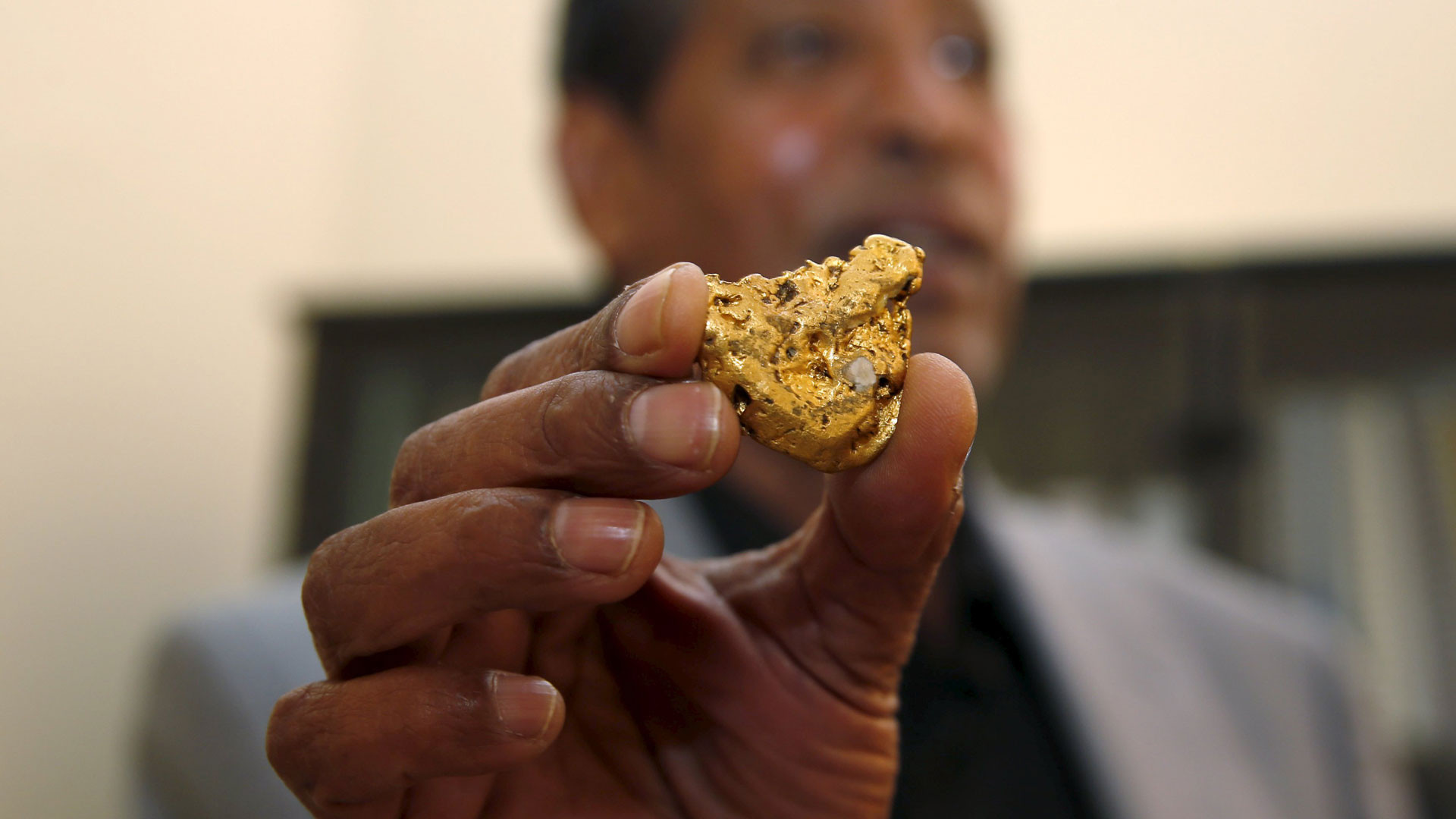
How to Buy and Import Gold from Africa to Dubai : Complete Buyer’s Guide to Legal Gold Sourcing, Documentation and Verified Miners
Buying gold from Africa and importing it into Dubai can be an attractive opportunity for bullion traders, refiners, jewelry manufacturers, investors and international commodity buyers.
But experienced buyers know that buying African gold is not simply a matter of finding a seller offering a low price.
The real question is:
Can the buyer prove where the gold came from, who legally owns it, whether the seller is authorized to sell and export it, whether the gold has been properly assayed, and whether the complete transaction can pass the compliance requirements of both the exporting country and the United Arab Emirates?
That is the approach international buyers should take in 2026.
This guide explains how buyers can evaluate African gold suppliers, understand export documentation, verify mining companies, arrange transportation and prepare for import into Dubai.
It also explains how to use a supplier directory such as CEMAC Buyers Permit without treating a directory listing as a substitute for government verification.
Gold-mining, export, customs, tax and responsible-sourcing requirements vary by country and transaction. This article is educational and should not replace advice from the competent government authority, customs broker, lawyer, tax adviser, refinery or compliance professional handling the transaction.
1. Why Dubai buyers are looking to African gold suppliers
Dubai has developed one of the world’s major precious-metals trading ecosystems.
The Dubai Multi Commodities Centre (DMCC) describes gold as one of its key ecosystems and operates within a UAE regulatory environment that includes responsible sourcing, refining and distribution standards. The UAE Good Delivery framework is overseen by the Emirates Gold Bullion Committee.
For an African mining company, this creates an important commercial opportunity.
For an international buyer, however, Dubai’s established gold market also means that documentation and due diligence matter.
A professional Dubai buyer may want to know:
- Who produced the gold?
- Is the supplier a mining company or intermediary?
- What mining or trading authorization does the supplier hold?
- Where exactly was the gold produced?
- How was the gold assayed?
- Who owns the gold before export?
- What export authorization applies?
- Which company will be the exporter of record?
- How will the shipment be insured?
- Which refinery or receiving facility will conduct the final assay?
- What responsible-sourcing information is available?
The strongest African gold suppliers should be prepared to answer these questions.
2. The first rule: verify the gold before negotiating the price
One of the biggest mistakes new buyers make is starting with:
“How much discount can you give me?”
Experienced buyers usually start somewhere else.
They first establish the legal and commercial identity of the transaction.
Before negotiating the final gold price, establish:
- The identity of the seller.
- The legal status of the company.
- The source of the gold.
- The seller’s right to commercialize the gold.
- The applicable export authorization.
- The gold’s weight and purity.
- The assay procedure.
- The export route.
- The destination refinery or buyer.
- The payment and settlement mechanism.
Only after these points are reasonably clear should the buyer compare prices.
This matters because two offers that appear identical on a price-per-kilogram basis may have completely different economics after refining, transportation, insurance, taxes, customs, assay differences and other transaction costs.
A practical buyer rule
Never compare African gold offers solely by discount to the international gold price.
Compare the complete landed cost and the documentation supporting the transaction.
3. Where does the gold come from?
Africa is not a single regulatory jurisdiction.
Gold purchased from Cameroon is subject to Cameroonian rules.
Gold purchased from Ghana is subject to Ghanaian rules.
Gold purchased from Mali, the Democratic Republic of Congo, Tanzania or another country will have its own licensing, tax, customs and export framework.
This is why a generic statement such as:
“African gold requires X certificate”
should immediately be treated with caution.
The buyer should identify the country of origin first, then determine the applicable legal requirements.
For buyers sourcing from Central Africa, Cameroon is an important example because its mining regulatory framework has been updated.
4. Cameroon gold: understand the current regulatory framework
Cameroon adopted a new Mining Code through Law No. 2023/014 of 19 December 2023. The official text is published through the country’s Ministry of Mines, Industry and Technological Development (MINMIDT).
For buyers researching Cameroon gold, the official MINMIDT source should be the starting point for understanding the country’s mining legislation.
Cameroon Ministry of Mines — MINMIDT
The practical lesson for an international buyer is important:
A document found on a supplier’s website should be treated as evidence to verify, not automatically as proof of authorization.
The buyer should establish:
- the legal entity named on the document;
- the issuing authority;
- the document number;
- the issue date;
- validity period;
- commodity covered;
- activity covered;
- whether the authorization permits the particular transaction being proposed.
This is particularly important when the seller describes itself as a miner, exporter, dealer or licensed buyer.
Those roles are not necessarily interchangeable.
5. Cameroon’s 2024 mineral regulations matter to buyers
Cameroon subsequently introduced implementing regulations governing the possession, commercialization, export, import and transit of mineral substances.
The government published Decree No. 2024/05251/PM of 19 November 2024, which is part of the regulatory framework buyers should consider when evaluating a Cameroon gold transaction.
There is also a separate 2024 decree dealing with alloying, refining and manufacturing of articles made from precious and semi-precious substances.
These developments illustrate why buyers should avoid relying on old blog posts or old “export permit” checklists.
Better practice
Before purchasing gold from Cameroon:
Check the current government framework → identify the applicable authorization → obtain the supplier’s document → verify the document → confirm the transaction-specific export procedure.
That sequence is considerably safer than simply asking a seller:
“Do you have an export license?”
6. What documents should a serious African gold supplier provide?
The exact documentation depends on the producing country, mining operation and transaction.
However, an international buyer should normally expect documentation in several categories.
Company documentation
This may include:
- certificate of incorporation;
- company registration information;
- tax identification;
- registered address;
- directors or authorized representatives;
- corporate bank information.
The company signing the sales agreement should be identifiable.
If the contract is with Company A but the payment is requested to an unrelated individual or Company B, the buyer should stop and investigate.
Mining or production documentation
Depending on the jurisdiction and type of operation, this can include:
- mining authorization;
- artisanal or small-scale mining authorization;
- semi-mechanized mining authorization;
- mineral trading authorization;
- dealer or collector authorization;
- concession information;
- production documentation.
The terminology varies by country.
The important question is:
What legal basis connects this company to the gold being offered?
Gold documentation
The buyer should request information about:
- gross weight;
- net weight;
- purity;
- assay;
- form of gold;
- bar identification;
- refining status;
- sampling method;
- laboratory or assayer;
- final assay procedure.
A supplier saying “24K gold” is not sufficient documentation.
The buyer needs to know how that purity was established.
7. Gold assay: one of the most important parts of the transaction
The assay determines the metal content used for settlement.
A buyer should therefore understand:
- who performs the initial assay;
- whether the seller or buyer chooses the laboratory;
- whether sampling is witnessed;
- whether the buyer can conduct an independent assay;
- what happens if the final assay differs from the seller’s assay;
- who pays refining and assay costs.
For larger transactions, the purchase agreement should clearly define the settlement mechanism.
For example, the contract may specify that final payment is based on an independent refinery assay after delivery.
The important point is not which model is universally “best.”
The important point is that the model is agreed before money and gold change hands.
8. Gold doré is not the same as refined investment gold
International buyers should also distinguish between gold forms.
Gold doré
Gold doré is a semi-refined product that may contain gold together with silver and other metals.
The commercial value therefore depends on:
- weight;
- gold content;
- silver or other payable metals;
- refining costs;
- refinery terms;
- final assay.
Refined gold
Refined gold has undergone additional processing and may meet a specified purity standard.
The buyer should not assume that a seller’s statement such as “24K” automatically means the material meets the requirements of a particular refinery, market or investment product.
The receiving refinery’s specifications should be established before shipment.
9. Responsible sourcing is now a central part of UAE gold compliance
This is one of the most important changes buyers should understand.
The UAE has a formal framework for responsible sourcing of gold.
The Ministry of Economy’s regulations are designed to identify and mitigate risks in gold supply chains and incorporate a five-step due-diligence approach.
The UAE Ministry of Economy also publishes Ministerial Decree No. 68 of 2024 regarding Due Diligence Regulation for Responsible Sourcing of Gold.
UAE Ministry of Economy — Responsible Sourcing of Gold
This means that responsible sourcing should not be treated as a marketing slogan.
For a professional gold buyer, useful supply-chain evidence can include:
- mine or production origin;
- supplier identity;
- ownership information;
- transaction records;
- transportation records;
- export documentation;
- payment information;
- risk assessment;
- chain-of-custody information.
For suppliers targeting Dubai, building this documentation capability can be a commercial advantage.
10. Why DMCC and UAE Good Delivery standards matter
Dubai’s precious-metals ecosystem includes the DMCC and the UAE Good Delivery framework.
DMCC states that the UAE Good Delivery standard covers responsible sourcing, refining and distribution of gold and related products.
DMCC Gold Ecosystem and UAE Good Delivery information
The Emirates Gold Bullion Committee oversees the UAE Good Delivery Standard for Gold, which was launched as a national standard.
For an African supplier, this leads to a practical conclusion:
If your intended buyer is a Dubai refinery, bullion trader or institutional buyer, ask that buyer what documentation and refinery specifications they require before the gold leaves Africa.
Doing so can prevent a situation in which the shipment arrives but the receiving party requests additional documents, testing or compliance information.
11. Do not use the Kimberley Process as a gold certificate
This is an important correction to many online African gold guides.
The Kimberley Process Certification Scheme applies to rough diamonds, not as a general certification system for gold.
The official Kimberley Process describes its purpose as preventing trade in conflict diamonds and regulating trade in rough diamonds.
Kimberley Process — Official Certification Information
Therefore, a gold buyer should not be told that a Kimberley Process certificate is the normal export certificate required for gold.
Gold has its own country-specific mining, export, customs and responsible-sourcing requirements.
This distinction is particularly important for a website that publishes information about both gold and diamonds.
12. How to verify a gold miner before signing a contract
A good supplier directory should make verification easier.
But buyers should still perform their own due diligence.
Here is a practical sequence.
Step 1 — Verify the legal company
Check:
- legal name;
- registration information;
- address;
- directors or authorized representatives;
- tax identification where applicable.
Step 2 — Identify the supplier’s role
Ask whether the company is:
- a mining company;
- artisanal operator;
- semi-mechanized operator;
- licensed trader;
- exporter;
- refinery;
- intermediary.
Do not assume that “gold company” means “mine owner.”
Step 3 — Verify the legal source of the gold
Ask:
“What document establishes your right to commercialize this gold?”
Step 4 — Verify export eligibility
Ask:
“What document authorizes this shipment to leave the country?”
Step 5 — Verify the assay
Request the assay document and determine:
- issuer;
- date;
- sample;
- weight;
- purity;
- methodology.
Step 6 — Verify the payment destination
The bank account should correspond to the legal contracting entity unless there is a documented and legally explained structure.
Step 7 — Verify the receiving refinery
Before shipment, ask the Dubai refinery or receiving facility what documents it requires.
13. How a buyer should use the CEMAC Buyers Permit directory
The purpose of a buyer directory should not be:
“Here are 100 companies. Trust them.”
A stronger model is:
“Here are companies, their publicly available information, the documents they say they hold, and the questions you should ask before engaging them.”
That distinction is important.
CEMAC Buyers Permit can function as a discovery and due-diligence resource for buyers looking for African mining companies and mineral exporters.
CEMAC Buyers Permit — African Gold Buyer Directory
A supplier profile should ideally tell buyers:
- company name;
- country;
- mining region;
- type of operation;
- products;
- company registration information where available;
- documentation supplied;
- verification status;
- website;
- contact information;
- what the directory has actually verified.
Avoid the word “verified” without explaining what it means
For example:
Company listed
The company has submitted information.
Documents supplied
The company has supplied specified documents.
Documents reviewed
The directory has reviewed the supplied documents against its published checklist.
Government verification recommended
The buyer should confirm the documents directly with the competent government authority.
Independent verification completed
The directory has independently confirmed a specified fact.
This is far more transparent than simply putting a green “VERIFIED” badge beside every supplier.
14. Where buyers can research Bonasgold
One of the Cameroon mining companies that international buyers may wish to research is Bonasgold Mining Corporation.
Bonasgold publishes information about its Cameroon operations and provides documents through its website, including corporate and gold-export-related materials.
Bonasgold Mining Corporation — Gold and Mining Information
For buyers, the correct approach is to treat supplier-published documents as part of the due-diligence file.
A buyer should compare:
supplier name → company registration → authorization → contract entity → bank account → shipment documents
The names and entities should make commercial sense and should be independently checked where appropriate.
This is the standard that should be applied to Bonasgold and every other supplier listed in a buyer directory.
15. Where buyers can research SominkiGold
Another Cameroon-based company buyers may wish to investigate is SominkiGold International Mining Group.
SominkiGold publishes company information, contact details and documentation resources on its website. Its published company information includes a business registration number, tax identification number and registered address.
SominkiGold — Cameroon Gold Mining and Export
SominkiGold also publishes information about its gold mining and export activities and describes its process for international buyers.
Again, the buyer should independently verify transaction-specific documentation.
The purpose of a directory should be to connect the buyer with the company and make due diligence easier, not to eliminate the buyer’s responsibility to conduct due diligence.
16. Shipping gold from Africa to Dubai
Precious metals require specialized logistics.
A buyer should establish the logistics plan before the transaction is finalized.
The shipment may involve:
- secure transportation;
- insurance;
- customs clearance;
- airport handling;
- export documentation;
- airway bill;
- receiving refinery;
- chain-of-custody records.
For high-value shipments, ordinary parcel shipping is obviously not appropriate.
The buyer and seller should establish:
- who arranges transportation;
- who pays transportation;
- who purchases insurance;
- where risk transfers;
- who handles customs;
- who is exporter of record;
- who is importer of record;
- what happens if the shipment is delayed;
- what happens if the final assay differs.
These terms should be written into the commercial agreement.
17. Importing gold into Dubai: check the exact customs classification
A common SEO statement on gold websites is:
“Dubai has 0% import duty on gold.”
That is too simplistic to use as a blanket statement.
The UAE operates an official customs tariff system based on HS classification. The Federal Authority for Identity, Citizenship, Customs & Port Security explains that the official tariff identifies goods and applicable customs duties, exemptions and other treatment according to classification.
UAE Central Customs Tariff System — Official ICP Portal
Therefore, the buyer should determine:
- What exactly is being imported?
- What is its HS classification?
- What is its origin?
- What customs treatment applies?
- Are there exemptions or special provisions?
- What documents are required?
This is much safer than relying on a generic “gold is duty-free” statement.
18. UAE VAT and investment gold
Another frequently repeated statement is:
“Gold is VAT exempt in Dubai.”
Again, this needs to be more precise.
The UAE has specific VAT treatment for qualifying investment precious metals.
The Federal Tax Authority’s rules cover investment precious metals, including qualifying gold meeting the relevant purity and marketability conditions.
The UAE also has a specific reverse-charge framework concerning qualifying precious-metals transactions between VAT-registered businesses.
UAE Federal Tax Authority — VAT and Precious Metals
The buyer should therefore not assume that every form of gold receives identical VAT treatment.
Gold jewelry, gold doré, raw material, scrap, refined bullion and qualifying investment precious metals can have different commercial and tax considerations.
Confirm the treatment of the actual product before shipment.
19. Payment: how buyers can reduce transaction risk
The payment structure should match the documentation and delivery structure.
Possible commercial structures can include:
- letter of credit;
- escrow arrangement;
- staged payments;
- payment against documents;
- payment after independent assay;
- other contractual settlement structures.
The correct structure depends on the buyer, seller, jurisdiction, bank and transaction.
What buyers should avoid is an unexplained demand for a large payment to an unrelated individual before documentation has been established.
Red flags include:
- 100% payment demanded immediately;
- pressure to “act today”;
- bank account belongs to an unrelated person;
- documents cannot be independently checked;
- seller refuses an independent assay;
- seller refuses a written contract;
- price is dramatically below market without explanation;
- seller cannot explain export procedures;
- supplier claims to be a government agency without evidence;
- supplier uses unrelated company names on different documents.
One red flag does not automatically prove fraud.
Several together should cause the buyer to stop and investigate.
20. What should a gold purchase agreement contain?
A professional contract should clearly identify:
Buyer
- legal entity;
- address;
- authorized representative.
Seller
- legal entity;
- registration details;
- address;
- authorized representative.
Commodity
- gold form;
- quantity;
- minimum purity;
- bar or lot identification where applicable.
Price
- pricing benchmark;
- currency;
- discount or premium;
- applicable refining costs;
- settlement mechanism.
Assay
- initial assay;
- final assay;
- laboratory/refinery;
- sampling procedure;
- dispute mechanism.
Export
- exporter of record;
- required documents;
- responsible party;
- taxes and fees.
Transportation
- carrier;
- insurance;
- risk-transfer point;
- destination.
Payment
- bank details;
- payment schedule;
- conditions for release;
- consequences of documentation failure.
Dispute resolution
The agreement should also state which law governs the contract and how disputes will be handled.
21. What makes a mining supplier attractive to Dubai buyers?
The most competitive mining companies will not necessarily be the companies offering the largest headline discount.
A professional buyer may value:
Traceability
Can the company explain where the gold came from?
Documentation
Can the company produce the necessary documents consistently?
Assay discipline
Can the company provide reliable analytical information?
Export capability
Does the company understand the legal export process?
Responsible sourcing
Can the company respond to supply-chain due-diligence questions?
Communication
Can the company provide clear documentation in a professional transaction?
Consistency
Can the company supply repeatedly rather than only produce one attractive sample?
This is where legitimate miners can distinguish themselves from anonymous intermediaries.
22. A better verification system for African gold suppliers
For a website such as CEMAC Buyers Permit, I recommend creating a visible supplier-verification methodology.
For example:
| Status | Meaning |
|---|---|
| Listed | Supplier has been added to the directory |
| Company information supplied | Corporate information has been provided |
| Documents supplied | Supplier has supplied specified documents |
| Documents reviewed | Directory has reviewed supplied documents |
| Government confirmation | Specific information independently confirmed |
| Site/physical verification | Physical verification performed |
| Buyer due diligence required | Buyer must complete its own transaction checks |
This system creates an important distinction:
Directory verification is not the same as transaction insurance.
That sentence alone can improve the credibility of the directory.
23. Questions buyers should ask before buying African gold
Before sending money, ask the supplier:
About the company
- What is your complete legal company name?
- Where are you registered?
- What is your registration number?
- What is your tax number?
- Who is authorized to sign the contract?
About the mine
- Where is the gold produced?
- What type of mining operation produces it?
- What authorization covers the operation?
- Who owns the mineral rights?
About the gold
- What form is the gold?
- What is the gross weight?
- What is the expected purity?
- Who performed the assay?
- Can the buyer conduct an independent assay?
About export
- Which authority handles the export?
- What export documentation will be provided?
- Who is the exporter of record?
- What customs process applies?
About Dubai
- Which refinery will receive the shipment?
- Has the refinery confirmed the required documentation?
- What UAE customs classification will apply?
- Has the VAT treatment been confirmed?
About payment
- Who owns the receiving bank account?
- When does title transfer?
- What happens if the final assay is different?
- What happens if export documentation is rejected?
If the answers are vague, the buyer should not rush.
24. How buyers can compare African gold suppliers
Instead of asking:
“Which African gold seller is the cheapest?”
a better question is:
“Which supplier gives me the best combination of legal source, documentation, assay confidence, price, logistics and transaction security?”
A useful comparison model is:
| Factor | Questions |
|---|---|
| Legal status | Is the company identifiable? |
| Source | Can the gold’s origin be documented? |
| Mining authority | Does the seller have a legal basis for the gold? |
| Export | Can the shipment legally leave the country? |
| Assay | Is purity independently verifiable? |
| Price | Is the discount commercially explainable? |
| Logistics | Is the shipment securely insured? |
| Dubai compliance | Can the receiving party accept the shipment? |
| Responsible sourcing | Can supply-chain risks be assessed? |
| Payment | Does the settlement structure protect both parties? |
This produces a much better buying decision than comparing headline prices.
25. Why experience matters when buying gold from Africa
International gold transactions often look straightforward from outside the mining industry.
In practice, several separate systems have to work together:
Mining
↓
Ownership
↓
Commercialization
↓
Assay
↓
Export compliance
↓
Customs
↓
Secure transportation
↓
UAE import
↓
Refinery/final assay
↓
Settlement
A failure at any stage can delay the transaction.
That is why experienced buyers focus on the entire supply chain rather than only the gold itself.
26. The role of a buyer directory in the African gold market
A high-quality directory should solve a genuine information problem.
International buyers often struggle to distinguish between:
- actual mining companies;
- mineral traders;
- brokers;
- agents;
- exporters;
- websites pretending to represent mines;
- companies with incomplete documentation.
A useful directory should therefore make the market easier to understand.
The purpose is not to tell the buyer:
“Trust this company.”
The purpose is to tell the buyer:
“Here is what this company says it does, here is the information available about it, here is what you should verify, and here are the official authorities and regulations you should consult.”
That is a much stronger foundation for long-term organic search visibility.
27. CEMAC Buyers Permit: connecting buyers with African mining companies
CEMAC Buyers Permit can position itself as an information and discovery platform for international buyers looking for African mineral suppliers, particularly within the CEMAC region.
Browse African Gold Suppliers and Mining Companies
Instead of creating pages that simply repeat “trusted gold supplier,” the directory can provide:
- supplier profiles;
- country guides;
- documentation guides;
- mining-region information;
- government-source references;
- buyer checklists;
- gold assay education;
- export-process explanations;
- responsible-sourcing information;
- scam-awareness resources.
This creates a much deeper topical relationship between the directory and the actual questions international buyers ask.
28. Recommended supplier profiles: Bonasgold and SominkiGold
For buyers specifically researching Cameroon, two companies that can be presented as supplier profiles rather than blanket endorsements are Bonasgold and SominkiGold.
Bonasgold
Visit Bonasgold’s official website
Bonasgold publishes company and gold-export documentation on its website. Buyers should review the documents, confirm their current validity and independently verify the relevant information before entering into a transaction.
SominkiGold
Visit SominkiGold’s official website
SominkiGold publishes corporate information, contact information and documentation resources, as well as information about its mining and export activities.
The directory should give both companies their own dedicated profiles rather than repeatedly promoting them throughout every article.
That is better for users and better site architecture.
Then connect the relevant pages naturally.
This creates a topic cluster, rather than dozens of pages targeting essentially the same keyword.
No responses yet